Eyewear care and maintenance guide
] Precautions for use of prescription lenses and frames

Proper care of your glasses ensures the quality and comfort of your vision. The lifespan of your equipment depends on how well you look after it.
Here are some tips to help you maintain them properly:
Taking care of your glasses:
- Handle your glasses with both hands (when putting them on and taking them off).
- Place your folded glasses on their temples.
- Store your glasses in their case.
- Clean your lenses regularly with a suitable product: wipes, microfibre cloth or spray sold by your optician. WARNING: Some products sold in supermarkets are not suitable for optical lens coatings despite what their labels may claim. Frequent use may cause coating layers to crack or split, significantly reducing lens transparency. Lenses may gradually become cloudy and unusable.
- Do not expose your glasses to high temperatures (car dashboard in summer, fireplace, steam, etc.).
- Avoid sudden and significant temperature changes (thermal shock).
- Avoid contact with sharp or metallic objects and abrasive surfaces that may cause scratches. WARNING: Anti-scratch coating reduces the number and depth of scratches but does not prevent them.
- Do not subject them to impact or sit on them.
- Do not push your glasses up onto your head.
Cleaning and maintenance:
- Moisten with a spray from your optician and dry with a clean microfibre cloth or a clean, dust-free, lint-free cotton cloth.
- Never clean your glasses with products such as cream soap, acetone or bleach.
- Avoid paper towels and tissues which can scratch lenses.
- Avoid dry cleaning.
- In case of paint, glue or varnish stains, ask your optician for advice.
- In case of scratches: unfortunately nothing can be done and no guarantee applies, so take care to avoid scratches.
- Use only original spare parts and accessories.
Visit our VIDEOS section for more advice on maintaining safety equipment.
Storage:
- After use, store your glasses in their case or original pouch to avoid abrasion and scratches on the lenses and ensure compliance.
- Store in a dry place at a temperature between -10°C and +35°C.
- Avoid exposure to sunlight in enclosed, non-air-conditioned spaces, e.g. a vehicle dashboard.
] Reading a glasses prescription
To view the "reading a prescription" section, click on the image below:

] Prescription validity
| PATIENT AGE | GLASSES | CONTACT LENSES |
| Under 16 | 1 year | 1 year |
| Between 16 and 42 | 5 years | 3 years |
| Over 42 | 3 years | 3 years |
] Eye specialist consultation
| PATIENT AGE | RECOMMENDED VISIT FREQUENCY |
| Child | Every year |
| Under 45 | Every 3 to 5 years |
| Between 45 and 50 | Every 2 to 3 years |
| From 65 | Every 2 years |
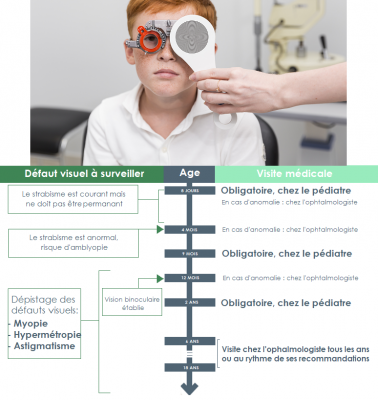
] Children’s vision
] Sunglasses
Sunglasses play an essential role in protecting your visual health by shielding against solar radiation. They must comply with specific standards. See our section: Sunglasses guide.
] Prescription safety glasses
In France, the main causes of eye accidents are lack of protection and the use of unsuitable protection. To prevent eye injuries, wearing appropriate glasses, masks and visors is recommended or even mandatory in certain sectors (see European Directive 89-656 and Article R233 of the French Labour Code).
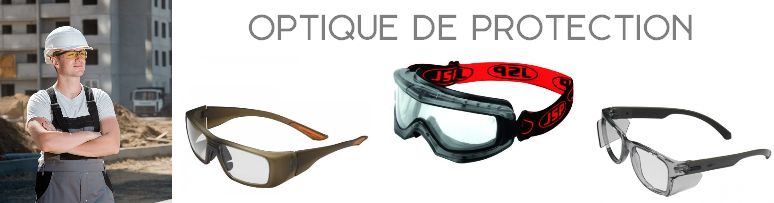
Private individual or professional, visit our section " Choosing the right safety glasses "
] Prescription sports glasses
Whether you are a professional or amateur athlete, adapt your vision to your sport. For optical glasses wearers, many solutions exist for each sport to help you perform in optimal conditions.
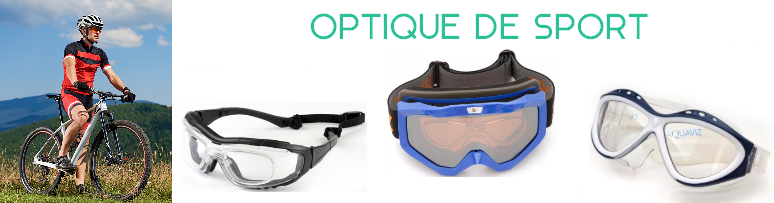
Visit our section " Choosing the right sports glasses "
] All about your vision
To explore the "eye and vision" section and other useful links about vision and optics, click on the image below: